

Many CX initiatives stall not because organizations lack insight, but because a formal CX governance model is missing. CX Governance is a critical but overlooked component of Customer Experience Management. In CX Pilot’s latest Insight Report, “Creating and Leading Your Organization’s CX Governance,” we provide an essential guide on CX Governance best practices.
CX governance is the structure organizations use to manage, prioritize, and execute customer experience initiatives across departments. A CX governance framework defines decision rights, ownership, prioritization processes and accountability so customer insights translate into coordinated action across the organization.
It consists of a cross-functional, governing board of internal stakeholders from departments across an organization that establish a framework for CX vision, strategy, resources, standards, and communication. B2B Customer Experience Governance unites entire organizations around preserving high value relationships through shared accountability, coordinated decision-making, and consistent experience delivery.
.jpeg)
CX governance creates a dedicated framework for customer-centric decision-making across your organization. It ensures a consistent, customer-centric approach leading to stronger client relationships, greater loyalty, and measurable business growth. It gives B2B organizations a clear structure for managing complex, multi-stakeholder customer journeys and ensures resources are directed toward the experiences that matter most.
Many organizations invest heavily in CX tools, surveys, and customer experience initiatives but still struggle to turn insights into action. Without a formal CX governance framework, efforts often become fragmented across departments, leaving no clear ownership for decisions or prioritization. Teams review customer experience metrics and feedback but lack a shared CX governance model to determine what should happen next.
This absence of structure creates common problems such as unclear decision rights, inconsistent escalation paths, and competing priorities between teams. CX initiatives stall because insights are collected but not translated into operational change.
Strong customer experience governance closes the gap between insight and execution. It establishes accountability, defines decision-making authority, and creates a single forum where CX insights are evaluated, tradeoffs are made, and actions align with business outcomes.
This governance structure becomes the operating model that turns customer insight into coordinated action across the organization. It is especially critical for CX governance in B2B organizations, where complex client journeys span sales, delivery, customer service, and renewal.
A CX governance framework defines how customer experience decisions are made, prioritized, and executed across the organization. It establishes the operating model that ensures CX insights translate into action.
A strong CX governance framework typically includes:
In B2B organizations, where customer journeys span sales, delivery, service, and renewal, a governance framework ensures that CX improvements remain coordinated across teams rather than fragmented.
"PRO TIP: Deliberately select members who may be somewhat skeptical about CX for your governance cohort and ask them to help make CX more pragmatic and real for other skeptics."
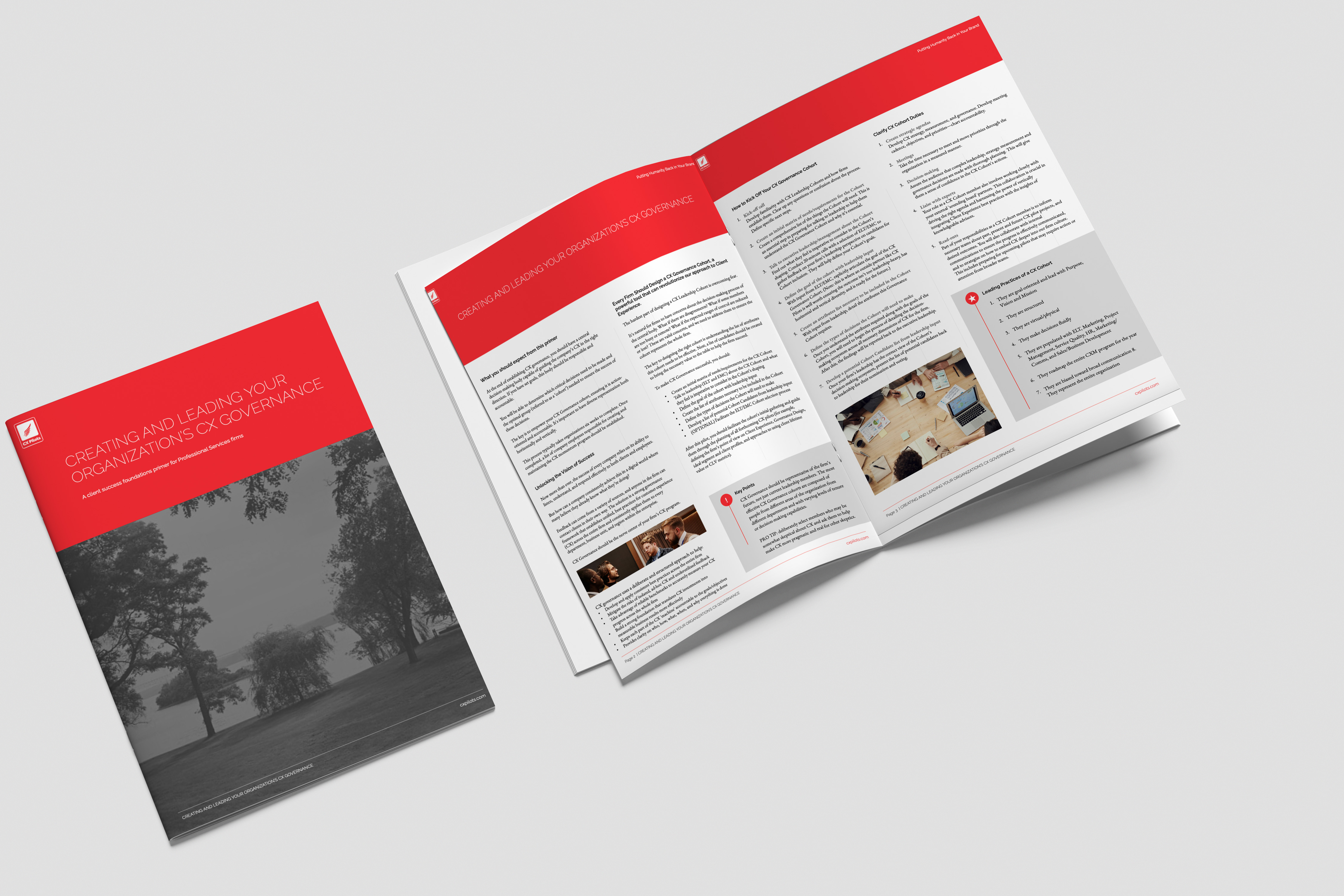
This insight report outlines a comprehensive framework for professional services firms seeking to establish effective CX governance. It highlights the importance of a dedicated, diverse, and empowered CX Governance Cohort, a structured implementation process, and a focus on aligning CX efforts with overall business strategy and goals.
Organizations often begin CX governance work through a structured CX assessment and strategy engagement that defines governance structures, operating models, and decision rights. The seven steps below outline how organizations can design a practical CX governance framework that aligns teams and drives measurable outcomes.
By following these principles and steps, organizations can establish a CX governance framework that aligns leadership, clarifies decision rights, and ensures customer insights translate into consistent action.

Many CX initiatives stall not because organizations lack insight, but because a formal CX governance model is missing. CX Governance is a critical but overlooked component of Customer Experience Management. In CX Pilot’s latest Insight Report, “Creating and Leading Your Organization’s CX Governance,” we provide an essential guide on CX Governance best practices.
CX governance is the structure organizations use to manage, prioritize, and execute customer experience initiatives across departments. A CX governance framework defines decision rights, ownership, prioritization processes and accountability so customer insights translate into coordinated action across the organization.
It consists of a cross-functional, governing board of internal stakeholders from departments across an organization that establish a framework for CX vision, strategy, resources, standards, and communication. B2B Customer Experience Governance unites entire organizations around preserving high value relationships through shared accountability, coordinated decision-making, and consistent experience delivery.
CX governance creates a dedicated framework for customer-centric decision-making across your organization. It ensures a consistent, customer-centric approach leading to stronger client relationships, greater loyalty, and measurable business growth. It gives B2B organizations a clear structure for managing complex, multi-stakeholder customer journeys and ensures resources are directed toward the experiences that matter most.
Many organizations invest heavily in CX tools, surveys, and customer experience initiatives but still struggle to turn insights into action. Without a formal CX governance framework, efforts often become fragmented across departments, leaving no clear ownership for decisions or prioritization. Teams review customer experience metrics and feedback but lack a shared CX governance model to determine what should happen next.
This absence of structure creates common problems such as unclear decision rights, inconsistent escalation paths, and competing priorities between teams. CX initiatives stall because insights are collected but not translated into operational change.
Strong customer experience governance closes the gap between insight and execution. It establishes accountability, defines decision-making authority, and creates a single forum where CX insights are evaluated, tradeoffs are made, and actions align with business outcomes.
This governance structure becomes the operating model that turns customer insight into coordinated action across the organization. It is especially critical for CX governance in B2B organizations, where complex client journeys span sales, delivery, customer service, and renewal.
A CX governance framework defines how customer experience decisions are made, prioritized, and executed across the organization. It establishes the operating model that ensures CX insights translate into action.
A strong CX governance framework typically includes:
In B2B organizations, where customer journeys span sales, delivery, service, and renewal, a governance framework ensures that CX improvements remain coordinated across teams rather than fragmented.
"PRO TIP: Deliberately select members who may be somewhat skeptical about CX for your governance cohort and ask them to help make CX more pragmatic and real for other skeptics."
This insight report outlines a comprehensive framework for professional services firms seeking to establish effective CX governance. It highlights the importance of a dedicated, diverse, and empowered CX Governance Cohort, a structured implementation process, and a focus on aligning CX efforts with overall business strategy and goals.
Organizations often begin CX governance work through a structured CX assessment and strategy engagement that defines governance structures, operating models, and decision rights. The seven steps below outline how organizations can design a practical CX governance framework that aligns teams and drives measurable outcomes.
By following these principles and steps, organizations can establish a CX governance framework that aligns leadership, clarifies decision rights, and ensures customer insights translate into consistent action.