Most firms that come to us with a client experience problem assume the answer lives somewhere between their client and their front line. Better communication. Stronger onboarding. A more attentive relationship manager.
Sometimes that's right. But often, when we get inside the operation, the real problem starts earlier and runs deeper: a handoff that nobody owns, a process that runs differently depending on who originated the project, a system that two teams are supposed to share but don't. The client feels it, but at the same time, the firm never notices it—or at least, that’s what the patterns we see day in and day out indicate.
Service blueprinting is how you find it.
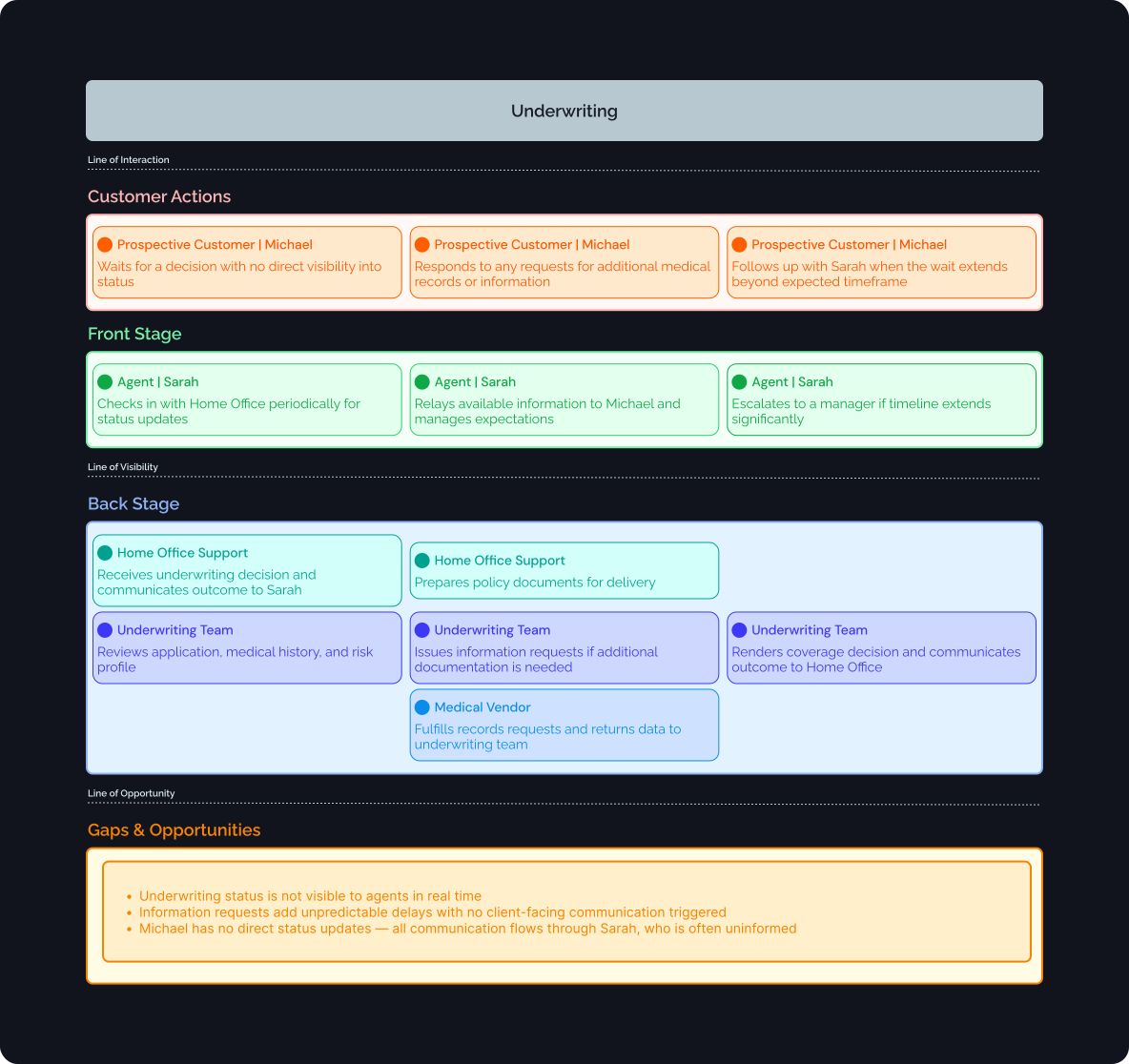
A service blueprint is a diagram that maps how a service gets delivered: the people, tools, processes, and handoffs involved, all tied to specific touchpoints in the client's experience. It separates what clients see from what the organization does to produce it, along with what's called the line of visibility.
Above the line of visibility: every interaction the client has with the firm.
Below the line of visibility: everything that has to happen internally to make those interactions possible.
That's what our Service Blueprinting Explained download walks through in detail: how to read a service blueprint, what each layer is measuring, and how a gap in one row connects to a problem in another.
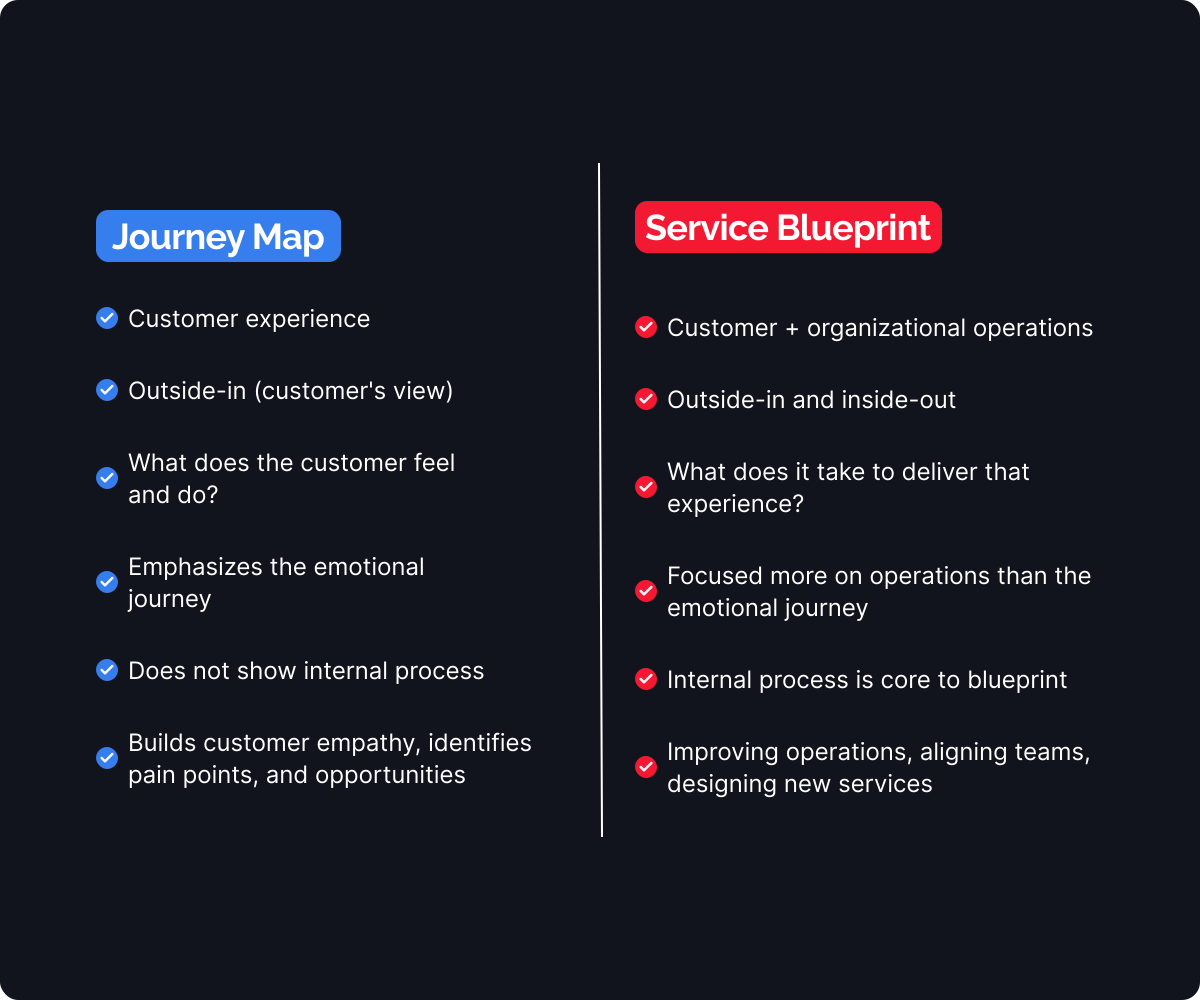
Journey mapping explores the end-to-end path a client takes when they do business with a firm. It's built from client research (e.g., interviews, observation, behavioral data) and it captures what clients are doing, thinking, feeling, and expecting at each stage.
It tells the story from the outside in.
Service blueprinting turns the lens around. Built from employee interviews with the people actually delivering the service, it reveals what's happening inside the firm to produce that experience. It’s designed to illustrate clearly where it's broken down or needs attention.
A journey map asks what the client is experiencing. A service blueprint asks how the stuff inside the firm may be preventing positive experiences from happening. Most of the time it’s process, operations, or technology. Sometimes it’s people.
A flight that lands forty minutes late looks one way to the passenger—it's typically a long wait at the gate, a razor-thin or missed connection, and no one at the gate with a clear answer or genuine empathy. A journey map would capture the stage where things fell apart, what the client was thinking, and where trust in the airline started to slip. However, it can't tell you that the gate agent never received the updated manifest, or that the breakdown happened three handoffs earlier, well before boarding began. That's what a service blueprint finds: the chain of events the client never sees but always feels. The journey map will tell us how people felt, while the service blueprint will indicate upstream what made that experience precisely what contributed to, or caused, the experience, as well as how and why it ended up that way.
When Pinion, an international accounting and advisory firm, commissioned a service blueprint of one of their top and fastest-growing services, they already knew there was friction. Billing confusion. Communication gaps. Projects starting later than expected. They needed to pinpoint where in the delivery process the client pain (and employee frustration, for that matter) was coming from. What was the cause behind that effect?
The blueprint showed that how a project was set up (and how consistently it ran from there) depended heavily on who had originated the client relationship. Role clarity was assumed rather than agreed upon, and the same service was running several different ways depending on who happened to be in the room.
The billing confusion traced back to a mismatch between when agreements were structured and when work began (and by whom). Clients received invoices that didn't match their expectations. The billing process wasn't wrong; it just hadn't been designed for the person receiving it.
Communicating proactively during delivery, keeping clients updated on status, flagging third-party delays, and telling them what was coming next turned out to be the highest-priority findings, and the hardest to act on. The coordination to make this consistent didn't yet exist.
The blueprint also named what process changes alone couldn't fix: delays tied to attorneys and outside specialists, complexity that resists any single template, and staffing constraints that grow as the service scales. Knowing where that line sits stops a firm from designing process solutions for problems that cannot be solved through process alone.
For a full picture of how a blueprint is structured and how to move from findings to action, download Service Blueprinting Explained.
The right starting point is selecting a service line that is relatively self-contained, is underperforming, and has a leader and subject matter experts fully committed to the process. The team defines the operational question the blueprint is being asked to answer, so findings stay tied to something the firm can act on.
Structured sessions with the people closest to the service surface what org charts and process documentation never show: where work slows down, where communication drops, where someone is carrying responsibility that was never formally assigned to them, etc. Sessions also explore what team members would fix if they could. That question consistently produces the most honest answers.
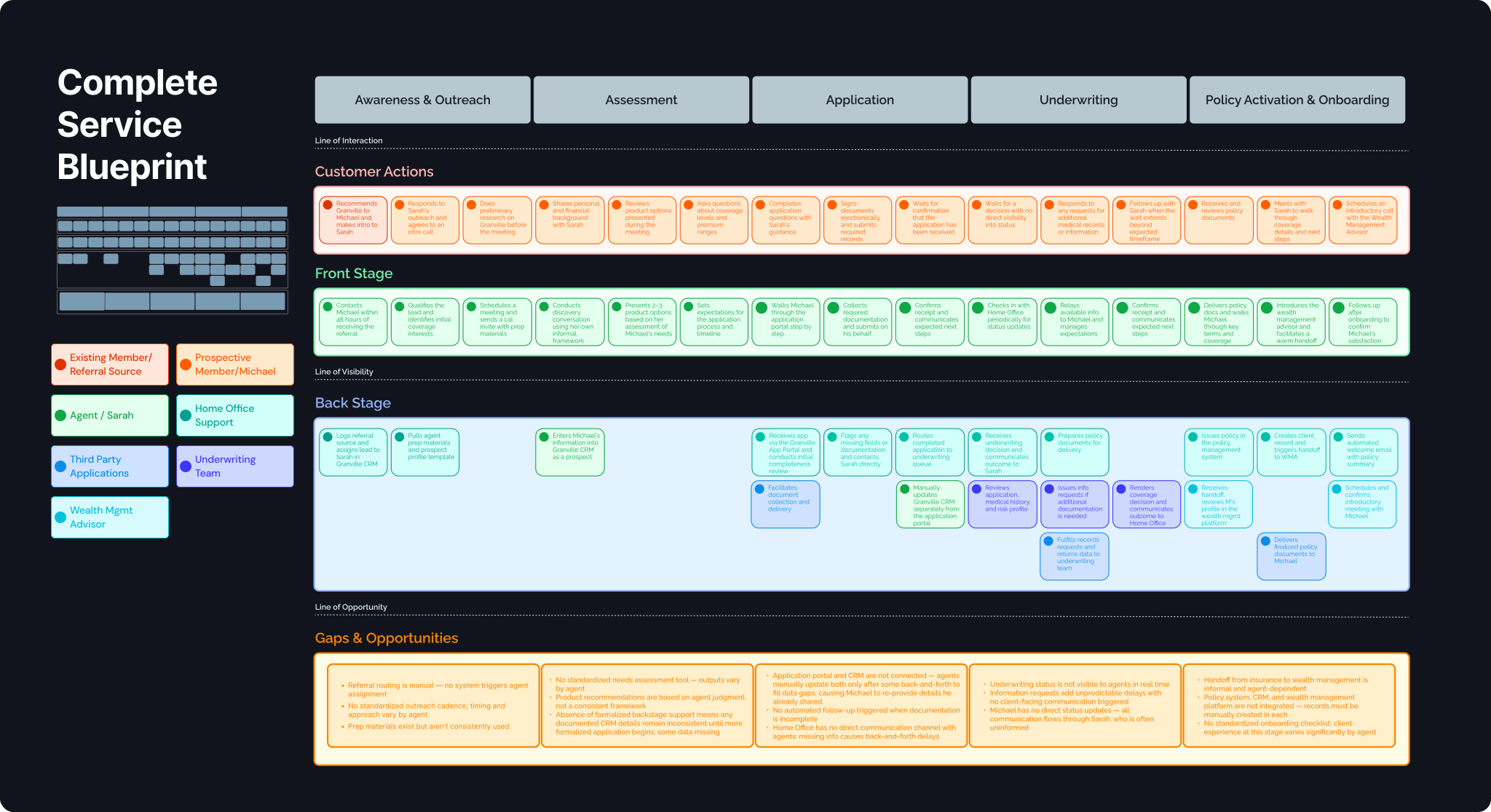
Findings are distilled into a visual map with four layers: what the client sees, what the client does and experiences, the backstage actors and systems supporting delivery, and a gaps and opportunities row that locates every problem precisely in the process. The financial impact of each gap is analyzed alongside the blueprint, connecting operational findings to revenue, margin, and cost.
Recommendations are scored against client impact, relevance to the firm’s larger goals, cost efficiency, competitive positioning, and implementation effort — separating what to address now from what requires a longer runway.
The full framework is in Service Blueprinting Explained.
Service blueprinting gives a firm something rare: a complete, shared picture of how a service actually works. That clarity translates into better decisions, greater consistency, and a team aligned around the same version of reality.
The blueprint surfaces six things that are almost always invisible until someone goes looking:
The result is a better process and a better experience, delivered more consistently at every stage.
CX Pilots leads service blueprinting engagements for professional services firms ready to see their operations clearly and act on the improvement opportunities they find. Download Service Blueprinting Explained to understand the methodology, or reach out to discuss whether blueprinting is the right fit for your firm.

Most firms that come to us with a client experience problem assume the answer lives somewhere between their client and their front line. Better communication. Stronger onboarding. A more attentive relationship manager.
Sometimes that's right. But often, when we get inside the operation, the real problem starts earlier and runs deeper: a handoff that nobody owns, a process that runs differently depending on who originated the project, a system that two teams are supposed to share but don't. The client feels it, but at the same time, the firm never notices it—or at least, that’s what the patterns we see day in and day out indicate.
Service blueprinting is how you find it.
A service blueprint is a diagram that maps how a service gets delivered: the people, tools, processes, and handoffs involved, all tied to specific touchpoints in the client's experience. It separates what clients see from what the organization does to produce it, along with what's called the line of visibility.
Above the line of visibility: every interaction the client has with the firm.
Below the line of visibility: everything that has to happen internally to make those interactions possible.
That's what our Service Blueprinting Explained download walks through in detail: how to read a service blueprint, what each layer is measuring, and how a gap in one row connects to a problem in another.
Journey mapping explores the end-to-end path a client takes when they do business with a firm. It's built from client research (e.g., interviews, observation, behavioral data) and it captures what clients are doing, thinking, feeling, and expecting at each stage.
It tells the story from the outside in.
Service blueprinting turns the lens around. Built from employee interviews with the people actually delivering the service, it reveals what's happening inside the firm to produce that experience. It’s designed to illustrate clearly where it's broken down or needs attention.
A journey map asks what the client is experiencing. A service blueprint asks how the stuff inside the firm may be preventing positive experiences from happening. Most of the time it’s process, operations, or technology. Sometimes it’s people.
A flight that lands forty minutes late looks one way to the passenger—it's typically a long wait at the gate, a razor-thin or missed connection, and no one at the gate with a clear answer or genuine empathy. A journey map would capture the stage where things fell apart, what the client was thinking, and where trust in the airline started to slip. However, it can't tell you that the gate agent never received the updated manifest, or that the breakdown happened three handoffs earlier, well before boarding began. That's what a service blueprint finds: the chain of events the client never sees but always feels. The journey map will tell us how people felt, while the service blueprint will indicate upstream what made that experience precisely what contributed to, or caused, the experience, as well as how and why it ended up that way.
When Pinion, an international accounting and advisory firm, commissioned a service blueprint of one of their top and fastest-growing services, they already knew there was friction. Billing confusion. Communication gaps. Projects starting later than expected. They needed to pinpoint where in the delivery process the client pain (and employee frustration, for that matter) was coming from. What was the cause behind that effect?
The blueprint showed that how a project was set up (and how consistently it ran from there) depended heavily on who had originated the client relationship. Role clarity was assumed rather than agreed upon, and the same service was running several different ways depending on who happened to be in the room.
The billing confusion traced back to a mismatch between when agreements were structured and when work began (and by whom). Clients received invoices that didn't match their expectations. The billing process wasn't wrong; it just hadn't been designed for the person receiving it.
Communicating proactively during delivery, keeping clients updated on status, flagging third-party delays, and telling them what was coming next turned out to be the highest-priority findings, and the hardest to act on. The coordination to make this consistent didn't yet exist.
The blueprint also named what process changes alone couldn't fix: delays tied to attorneys and outside specialists, complexity that resists any single template, and staffing constraints that grow as the service scales. Knowing where that line sits stops a firm from designing process solutions for problems that cannot be solved through process alone.
For a full picture of how a blueprint is structured and how to move from findings to action, download Service Blueprinting Explained.
The right starting point is selecting a service line that is relatively self-contained, is underperforming, and has a leader and subject matter experts fully committed to the process. The team defines the operational question the blueprint is being asked to answer, so findings stay tied to something the firm can act on.
Structured sessions with the people closest to the service surface what org charts and process documentation never show: where work slows down, where communication drops, where someone is carrying responsibility that was never formally assigned to them, etc. Sessions also explore what team members would fix if they could. That question consistently produces the most honest answers.
Findings are distilled into a visual map with four layers: what the client sees, what the client does and experiences, the backstage actors and systems supporting delivery, and a gaps and opportunities row that locates every problem precisely in the process. The financial impact of each gap is analyzed alongside the blueprint, connecting operational findings to revenue, margin, and cost.
Recommendations are scored against client impact, relevance to the firm’s larger goals, cost efficiency, competitive positioning, and implementation effort — separating what to address now from what requires a longer runway.
The full framework is in Service Blueprinting Explained.
Service blueprinting gives a firm something rare: a complete, shared picture of how a service actually works. That clarity translates into better decisions, greater consistency, and a team aligned around the same version of reality.
The blueprint surfaces six things that are almost always invisible until someone goes looking:
The result is a better process and a better experience, delivered more consistently at every stage.
CX Pilots leads service blueprinting engagements for professional services firms ready to see their operations clearly and act on the improvement opportunities they find. Download Service Blueprinting Explained to understand the methodology, or reach out to discuss whether blueprinting is the right fit for your firm.


