


Experience Strategy & Design
Evidence-based CX strategy and governance drive lasting business value
With over three decades and 50+ CX transformations, we know the competitive advantage is the sum of human relationships.

What this covers

Assessments
Value Driver Planning
Metrics
Service Blueprinting
Governance
Vision + Roadmap
Customer & employee experience determines client retention, referral revenue, and cost to serve.
516k
Customer and employee surveys behind our maturity model
50+
Customer experience transformations completed
5x
ROI identified through service blueprinting
Customer & employee experience determines client retention, referral revenue, and cost to serve.
Experience strategy decides where CX investment goes and what the organization holds itself accountable for. A governance program built on measured evidence protects client retention, grows referral revenue, and puts a documented cost on the processes quietly eroding both.
516k
Customer and employee surveys behind our maturity model
50+
Customer experience transformations completed
5x
ROI identified through service blueprinting
The Problem we’ve seen
CX Metrics Alone Fail to Drive Action
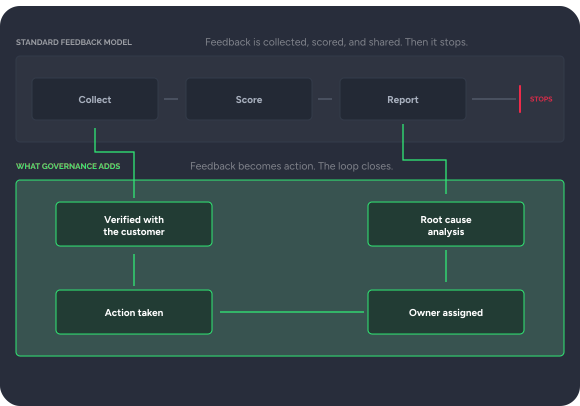
Most organizations already track CX metrics. Surveys run continuously, dashboards monitor customer satisfaction, and leadership sees Net Promoter Score trends each quarter. The data is rarely the gap. Teams measure everything and prioritize nothing, so leadership reviews the information without a clear signal about which metrics actually matter.
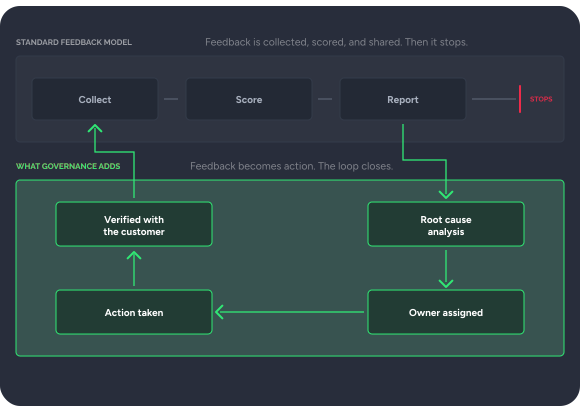
Measurement alone doesn't change behavior. Governance does. A structured governance model names which metrics move the needle, who owns them, and what happens when performance shifts. That's when CX metrics start influencing priorities, investment decisions, and how teams design the experience.
Measurement alone doesn't change behavior. Governance does. A structured governance model names which metrics move the needle, who owns them, and what happens when performance shifts. That's when CX metrics start influencing priorities, investment decisions, and how teams design the experience.
What we do
The CX Pilots Experience Strategy Methodology
Every recommendation ties back to something we measured: a maturity score against your industry's benchmark, the real cost of a broken process, or the distance between what leadership believes is happening and what employees say is actually happening. The output is data that can be acted on rather than a deck that has to be defended.
Assessments

Value driver planning
Metrics
Service blueprinting
Governance
Vision + Roadmap
Assessments
We survey your employees and your clients, then score your CX maturity against a model built on 516k surveys. You see where the two groups disagree and which gaps to close first.
Common deliverables:
- Ranked internal and external themes
- CX maturity report and score
- Industry benchmarking
- Comprehensive gap analysis
- CX improvement roadmap
- Findings presentation
Value driver planning
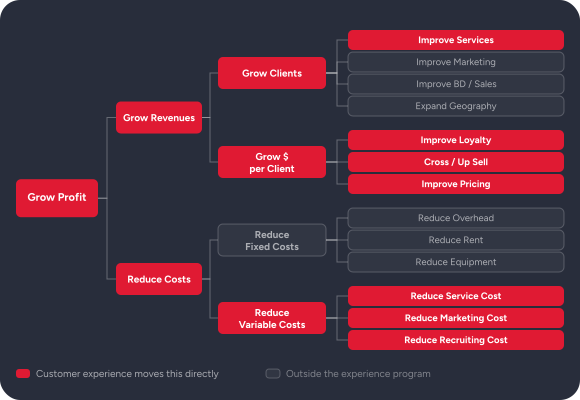
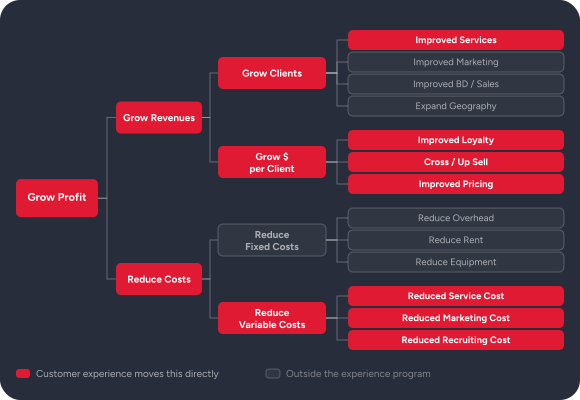
Leadership decides what customer experience is meant to produce, and we convert the answer into the economic language your CFO already uses.
Common deliverables:
- Value driver model
- Leadership alignment on target outcomes
- Experience-to-revenue economic model
- ROI hypotheses
Metrics
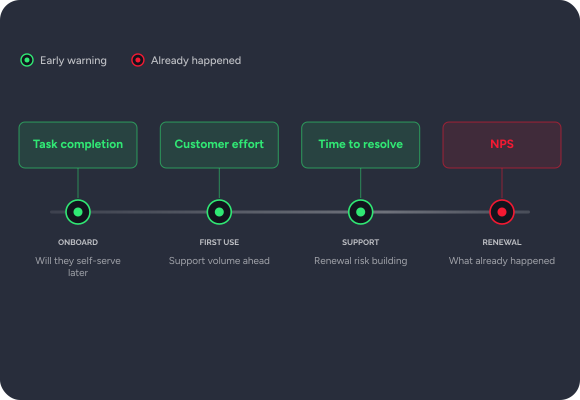
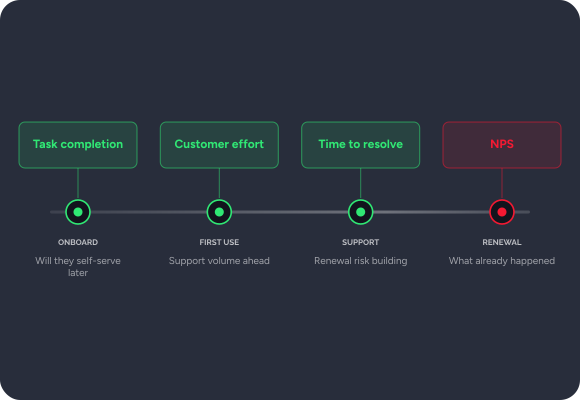
We identify the few metrics that signal renewal risk before it shows up in NPS, and tie each one to a point in the journey and an outcome leadership already tracks.
Common deliverables:
- Metrics audit and gap analysis
- CX metrics and KPI strategy
- Customized dashboard and reporting system
- CX ROI measurement
Service blueprinting
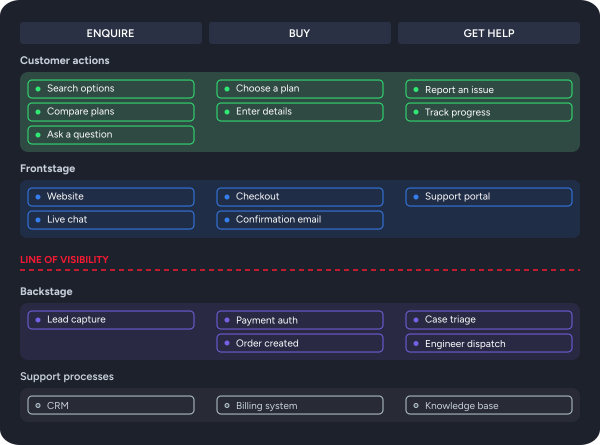
We map every step of the client experience, including the internal processes clients never see, and put a dollar figure on each point of friction. Recommendations come ranked by what they're worth."
Common deliverables:
- User research
- Process and touchpoint mapping
- Points of friction
- Prioritized recommendations
Governance
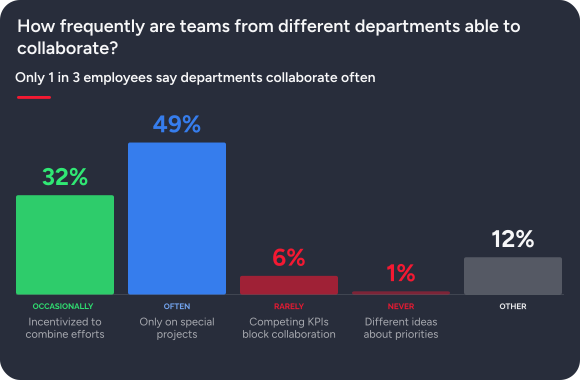
We set who reviews CX metrics, how often, and what happens when performance shifts. Every piece of feedback gets an owner and an action, so the same issues stop resurfacing quarter after quarter.
Common deliverables:
- Regular leadership reviews of CX metrics
- Governance structure and accountability framework
- Defined ownership for each KPI
- Frameworks for CX initiatives
Vision + Roadmap
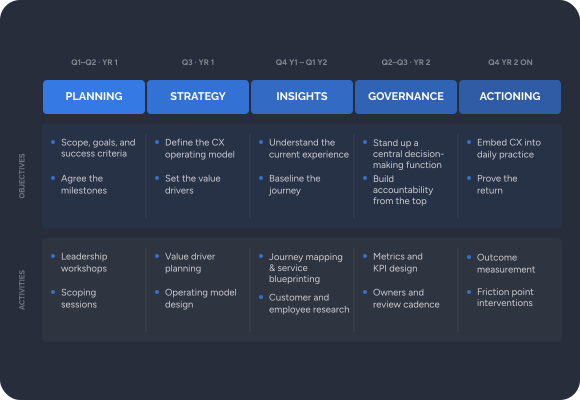
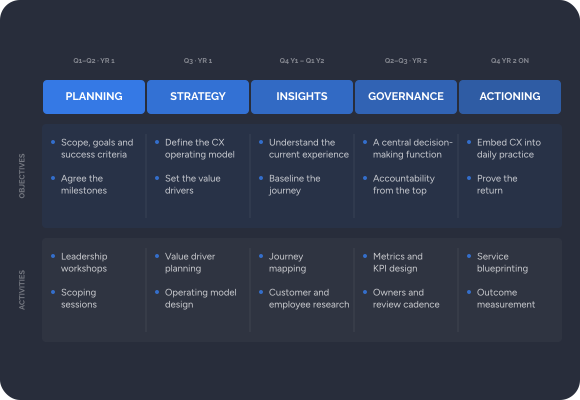
We turn assessment findings into a multi-year plan that sequences the work and shows leadership what to fund each year, with an owner for every initiative.
Common deliverables:
- Multi-year prioritization
- Intervention map for each friction point
- Leadership alignment workshops
- Investment and resourcing planning
.svg)
Assessments
Identify strengths, gaps, and opportunities. Assessments turn data collection, analysis, and benchmarking into a roadmap that aligns CX practices with business goals.
Common deliverables:
- Ranked internal and external themes
- CX maturity report and score
- Industry benchmarking
- Comprehensive gap analysis
- CX improvement roadmap
- Findings presentation
Value driver planning
Leadership decides what customer experience is meant to produce, and we convert the answer into the economic language your CFO already uses.
Common deliverables:
- Value driver model
- Leadership alignment on target outcomes
- Experience-to-revenue economic model
- ROI hypotheses
Metrics
A multi-tiered KPI structure that connects customer sentiment to specific points in the journey and to the outcomes leadership already tracks.
Common deliverables:
- Metrics audit and gap analysis
- CX metrics and KPI strategy
- Customized dashboard and reporting system
- CX ROI measurement
Service blueprinting
Process and touchpoint mapping ans strategy across the line of visibility, with finances attached to operational friction and recommendations.
Common deliverables:
- User research
- Process and touchpoint mapping
- Points of friction
- Prioritized recommendations
Governance
Establishes who reviews CX metrics, how often reviews occur, and what actions follow performance changes. Governance rallies leadership around shared CX KPIs and priorities.
Common deliverables:
- Regular leadership reviews of CX metrics
- Governance structure and accountability framework
- Defined ownership for each KPI
- Frameworks for CX initiatives
Vision + Roadmap
Connects assessment outcomes to governance and ongoing measurement. It defines strategy, ownership, sequencing and customer experience metrics that support accountability.
Common deliverables:
- Multi-year prioritization
- Intervention map for each friction point
- Leadership alignment workshops
- Investment and resourcing planning
experience strategy outcomes
comprehensive CX begins with an honest assessment and ends in a funded roadmap
A closed-loop feedback program treated as currency, tied to metrics that predict account health
Clarity on who owns customer experience, what gets reviewed, and where a dollar of effort returns most
Experience standards written into daily practice rather than sitting in a binder nobody opens
Customer experience built into how the firm talks about itself, internally and to capital partners
A shared 12- to 18-month roadmap so every function knows what it is building toward
%201%20(1).svg)
How we work
How a cx strategy becomes transformative
Your project needs may vary, and a tighter scope often calls for only two or three of these services. However, we will begin every engagement with an assessment so that every recommendation ties back to something we measured: a maturity score against your industry's benchmark, the real cost of a broken process, or the distance between what leadership believes is happening and what employees say is actually happening.
01
Assessments
02
Value Driver
Planning
Planning
03
Metrics
04
Experience
Mapping
Mapping
05
Governance
06
Vision + Roadmap
RESOURCES
The latest in Experience Strategy insights








FAQ
The most common questions we’ve heard from our clients about UX
How long does a CX maturity assessment typically take?

The process usually takes 3-5 weeks, depending on your organization's size, complexity and the number of people we need to talk to. This allows for thorough data collection, analysis, and actionable recommendations.
What tangible benefits can we expect from this assessment?
You'll gain a clear roadmap for CX improvement, identify quick wins, and have a benchmark for measuring progress. Clients typically see improved customer satisfaction scores and increased revenue within 6-12 months of implementing recommendations.
How does this assessment differ from customer surveys we already conduct?
While customer surveys provide valuable feedback, our assessment evaluates your internal CX capabilities and processes. It offers a holistic view of your CX maturity across multiple dimensions, revealing systemic issues and opportunities and helps you get a sense of implementation prioritization that will offer the most growth in the shortest amount of time.
Will this assessment disrupt our daily operations?
We design the process to be minimally disruptive. Most data is collected through surveys and focused interviews. The insights gained far outweigh the small-time investment required from your team.
How do you ensure the assessment findings are relevant to our specific industry?
Our methodology is tailored to B2B professional services, with industry-specific benchmarks. We also customize the assessment based on your unique business model and competitive landscape.
What if the assessment reveals major gaps in our CX capabilities?
Identifying gaps is valuable—it's the first step to improvement. We provide a prioritized action plan to address these gaps, focusing on high-impact, feasible initiatives to elevate your CX maturity.
How often should we conduct these assessments?
We recommend annual assessments to track growth progress in the right directions and adjustment strategies. However, reassessments after major organizational changes or at 18-month intervals can also be effective.
Can this assessment help us justify CX investments to leadership?
Absolutely. The assessment provides data-driven insights linking CX maturity to business outcomes. This evidence-based approach helps build a compelling business case for CX investments.
We already measure NPS. Why do we need more comprehensive CX metrics?
While NPS is valuable, it's just one piece of the puzzle. Our approach provides a holistic view of your CX performance, linking customer feedback to specific touchpoints and business outcomes. This enables more targeted improvements and clearer ROI demonstration.
How will CX metrics and governance impact our bottom line?
Companies with robust CX metrics and governance typically see 1.5x higher revenue growth and 2x higher customer retention rates. By aligning CX initiatives with business goals, you'll make more informed decisions that directly impact profitability.
We have multiple departments collecting customer data. How does this differ?
Our approach centralizes and standardizes CX metrics across your organization, eliminating silos and providing a single source of truth. This ensures all departments are working towards common goals and enables more effective cross-functional collaboration.
How long does it take to implement a CX metrics and governance program?
Initial setup typically takes 2-3 months, with ongoing refinement. Most companies see significant improvements in decision-making and CX performance within 6 months of implementation.
We're a B2B company. Are these metrics relevant to us?
Absolutely. B2B companies often have more complex customer journeys and longer sales cycles, making robust CX metrics even more critical. Our approach can be tailored to capture the nuances of B2B relationships and account-based success metrics.
How does CX governance differ from our existing management structure?
CX governance creates a dedicated framework for customer-centric decision-making across your organization. It ensures CX initiatives receive proper resources, attention, and accountability, often revealing opportunities that traditional management structures might miss.
We have limited resources. How can we justify investing in this?
Our CX metrics and governance program is designed to optimize resource allocation. By identifying the most impactful CX initiatives, you'll avoid wasting resources on less effective efforts. Many clients find that this approach actually reduces overall CX-related costs while improving outcomes.
How do you ensure the metrics and governance structure remain relevant over time?
Our program includes regular review and adaptation processes. We help you establish a culture of continuous improvement, ensuring your CX metrics and governance evolve with your business needs and changing customer expectations. This future-proofs your CX strategy and maintains its relevance.
How do I learn more about CX Governance?
The best place to start learning more about CX Governance is to read our Creating and Leading Your Organization’s CX Governance Insights Report. This free Insights Report provides a comprehensive framework for Professional Services firms seeking to establish effective CX Governance.
